Power that doesn’t wait for the queue
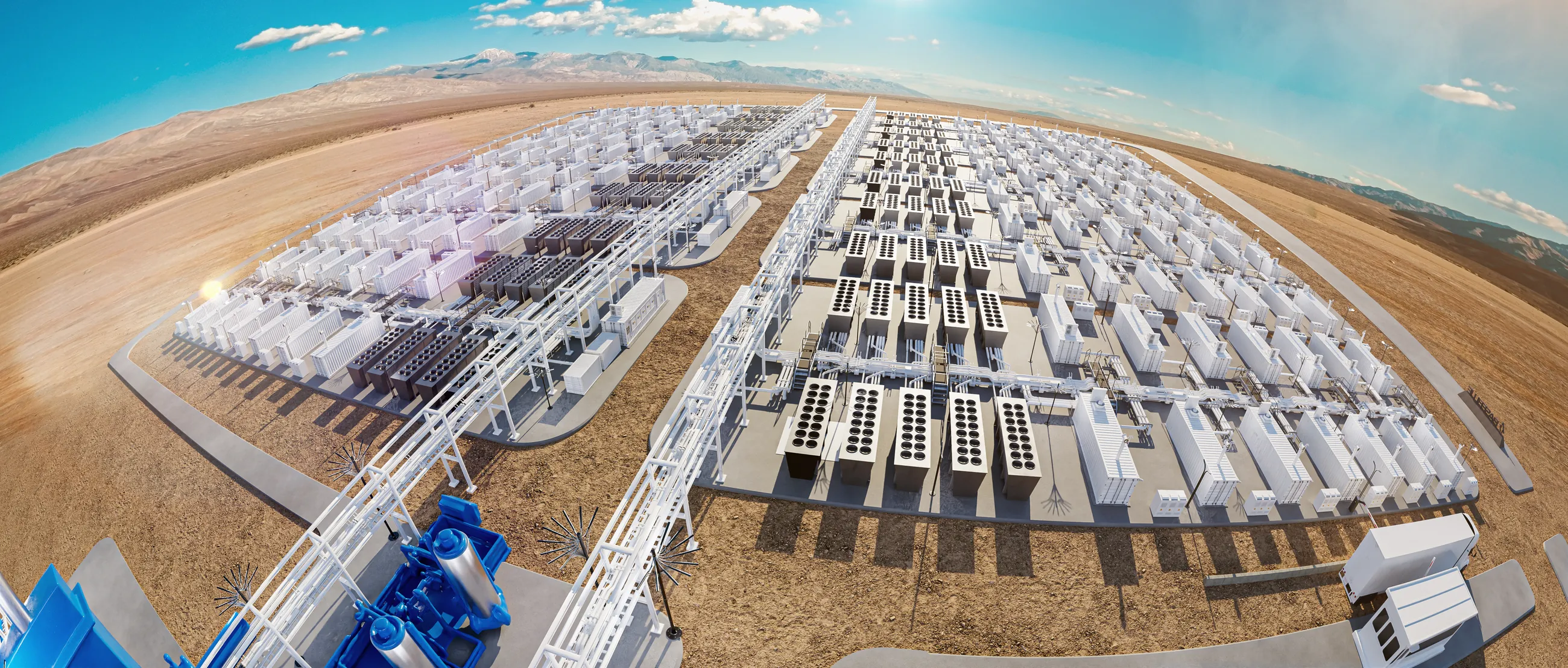
Data centers need firm, round-the-clock baseload power. BaseBlue Power delivers it behind the meter, from containerised fuel cell blocks fed by hydrogen made on site — so the schedule belongs to the project, not to the interconnection queue.
The demand
Demand more than doubles. The grid does not.
US data center power demand is set to grow from 62 GW in 2025 to 134 GW by 2030. Interconnection queues in the markets where that load wants to land already run five to ten years, which is why hyperscalers are turning to behind-the-meter supply to secure near-term capacity.
-
62 → 134GW
US data center power demand, 2025 to 2030.
-
5–10yrs
Years of grid interconnection delay in the fastest-growing markets
A data hall is designed for five-nines availability. That requirement does not bend to a queue position, so the question stops being when the grid can reach you and becomes what you can build on your own side of the fence.
The default answer
Gas-to-power works. It has also got expensive, slow and loud.
Gas-to-power is currently the dominant way to firm data center capacity, so it is the honest thing to measure against. Three of its numbers have moved in the wrong direction at once.
Combined-cycle gas turbine capital cost has surged from $1,000/kW to $2,600/kW.
Lead times of 4 to 7 years
Turbine OEM lead times are now commonly four to seven years, and they come with high upfront reservation fees.
Above 110 dB
Gas turbines at this scale are extremely loud, which forces setbacks and creates a standing nuisance for whoever lives nearby.
Permitting exposure
Turbines operating at scale have triggered Clean Air Act lawsuits, organised community opposition and outright project cancellations.
What arrives instead
A power plant delivered in blocks.
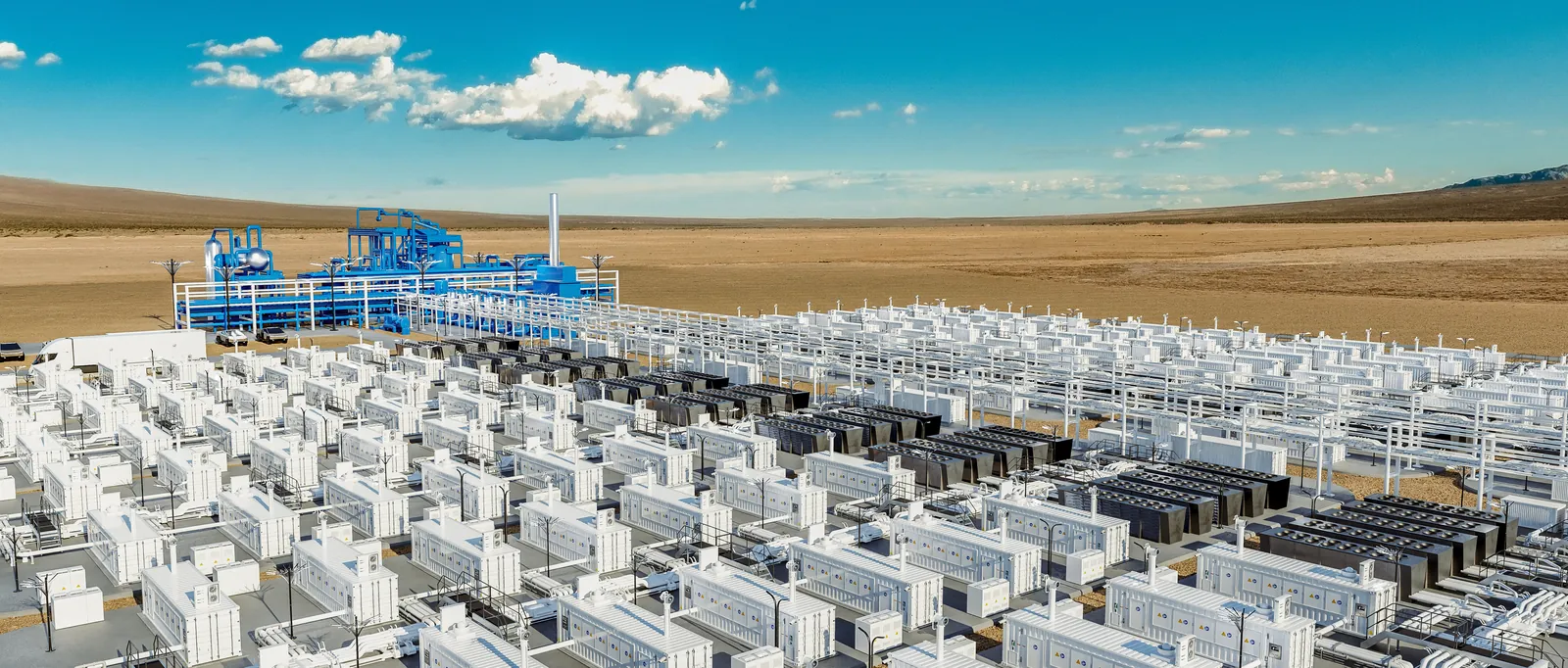
Containerised, MW-scale fuel cell power blocks, pre-fabricated and commissioned on a schedule a data center build can plan around — with the hydrogen made on site from natural gas, on its own supply chain.
Bankable behind-the-meter supply
A reliable and bankable behind-the-meter power solution, supported by a project finance framework and a long-term service agreement.
Modular by design
Capacity scales in MW blocks of 1 to 1.5 MW, so you add rows as the load grows instead of making one irreversible bet.
Fast deployment
The equipment relies on its own supply chain rather than on the turbine order book, which is what makes near-term delivery possible.
A route to low-carbon baseload
Hydrogen production with pre-combustion carbon capture, designed in from the start rather than retrofitted.
Quiet enough to sit close
The fuel cell blocks run at 60–65 dB — the level of office HVAC, not of a power station.
How it is contracted
A long-term agreement, in a bankable structure.
The project is held in a dedicated company, financed with debt and tax equity, and delivered under a power purchase agreement or a tolling arrangement. Operations sit with us under long-term service agreements.
Financing and structure