
How the fuel cell works
AI runs on power.
No turbine queue.

250 MW of reliable power.
You need baseload. You have BaseBlue.
The process
Five steps from a gas pipeline to a busbar.
Everything happens inside the fence. Natural gas and water arrive, hydrogen is made on site, and the fuel cell blocks convert it to power on your side of the meter. Two streams leave: electricity and a dried, concentrated CO₂ stream.
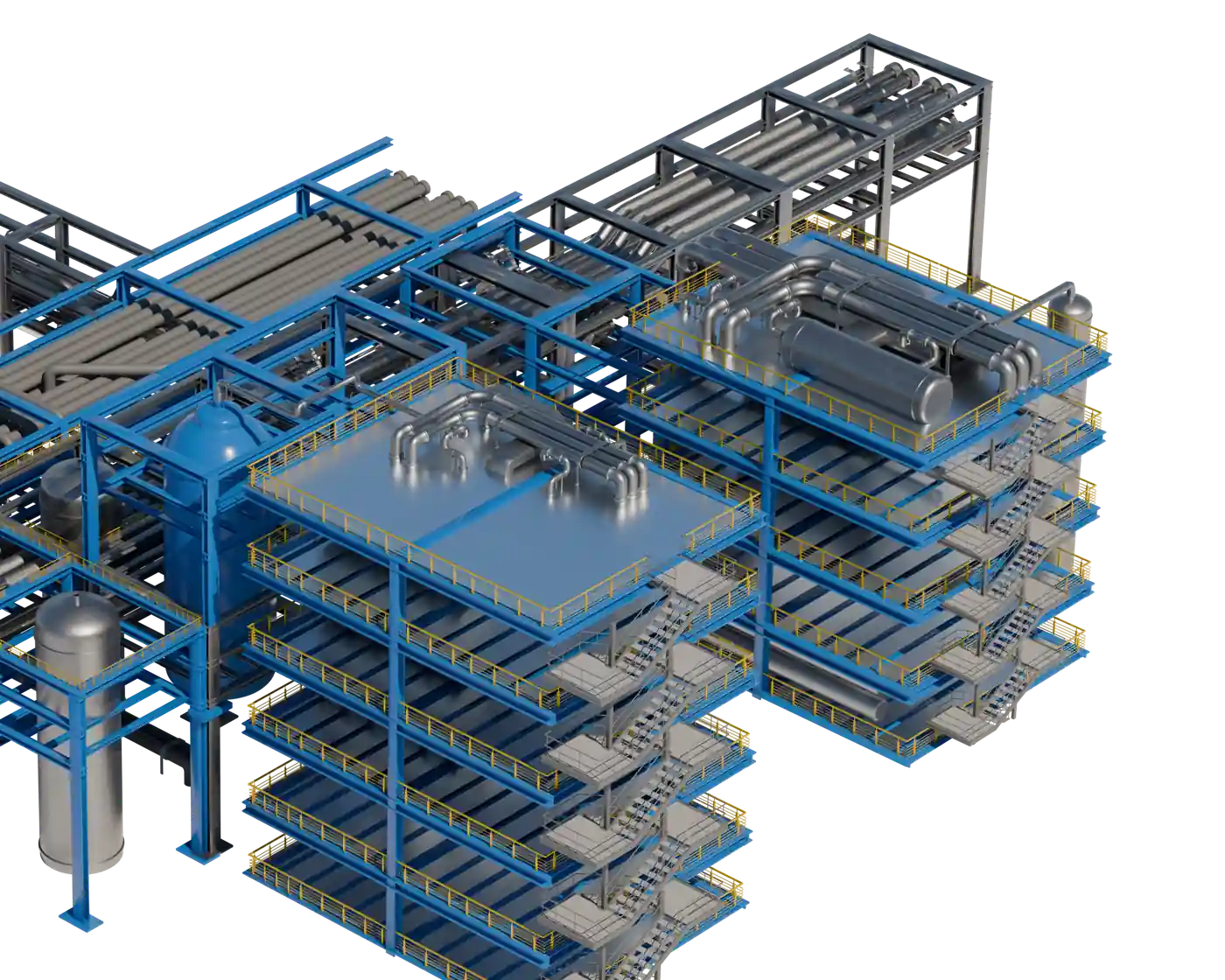
Zoom on the ATR
The hydrogen is the hard part. It is also the proven part.
Autothermal reforming is not a demonstration technology. It is refinery equipment, in industrial service today, licensed from a vendor whose plants already make roughly a third of the world’s hydrogen.
Carbon capture in the design
A CCS-ready design using proven pre-combustion capture, which is what makes the captured stream eligible for 45Q at $85 per tonne of CO₂.
Flexible down to half load
The reformer sustains performance down to 50 % load. That is what makes a phased build-out possible: the hydrogen train can run under-loaded while the fuel cell rows are still being added.
Key figures
The two halves of the plant, on paper.
Every figure here comes from the project material. Where the source gives more than one value, the figure is not published until it is confirmed.
Reformer and hydrogen
- Turndown
- 50 %
- Carbon credit
- 45Q, $85/tCO₂
Fuel cell block
- Module block
- 1 to 1.5 MW
- Stack technology
- Hydrogen PEM, TRL 9
- Electrical efficiency
- Above 50 %
- Operation
- 24/7 baseload
- Tax credit
- 30 % ITC, section 48E
Noise
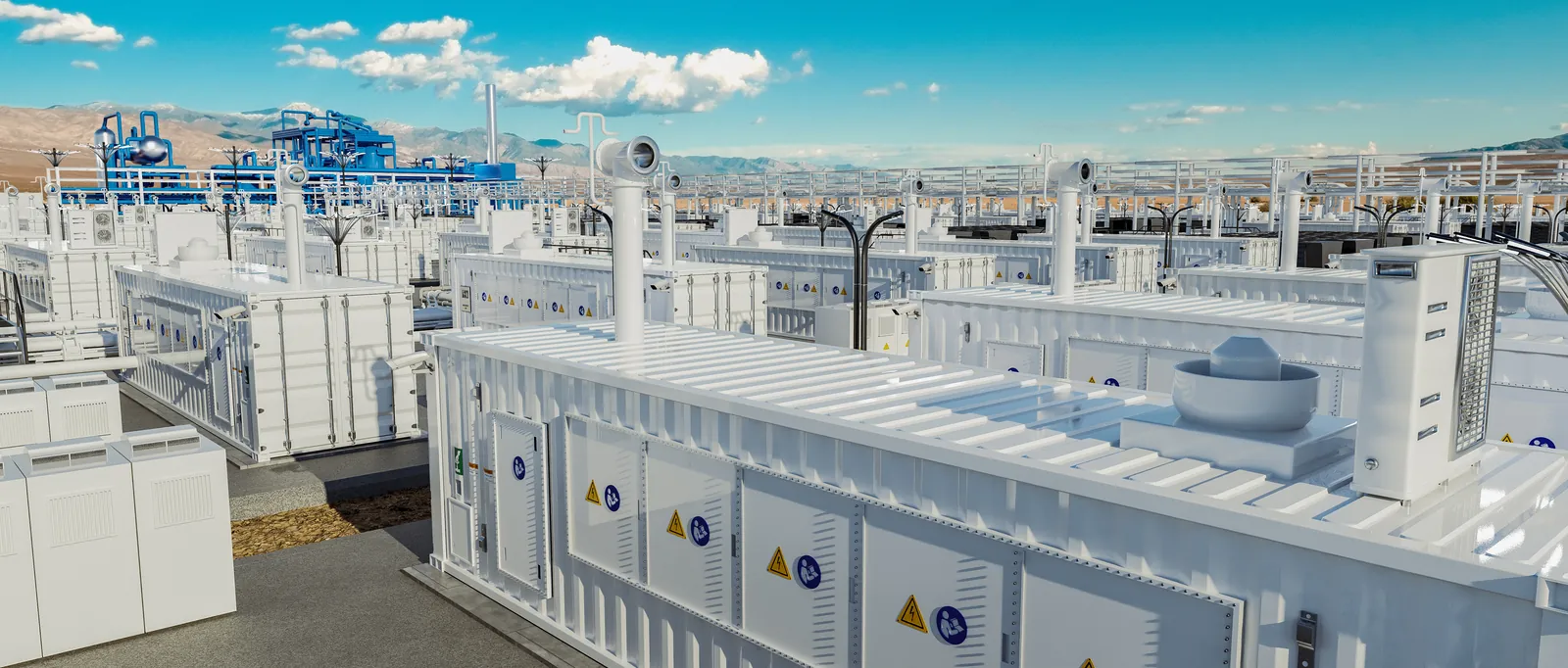
Quiet enough to sit next to the load.
This is not a soft argument. Gas turbines running at data center scale draw Clean Air Act lawsuits, community opposition and cancelled projects, and the noise is a large part of why. An electrochemical plant does not have that problem to manage.
Noise
- Fuel cell blocks — office HVAC level60–65 dB
- The reformer island, the loudest part of the plantBelow 90 dB
- Gas turbines at comparable scale, for referenceAbove 110 dB
What it means for a buyer
The technology is the reason the schedule works.
Everything above matters commercially for one reason: a modular, electrochemical plant that makes its own fuel is not queued behind the grid, behind a turbine order book, or behind a permit for a new stack.
How the blocks are manufacturedNo interconnection queue
Generation sits on your side of the fence. Interconnection waits of five to ten years stop being your critical path.
Capacity in blocks
Each block is 1 to 1.5 MW. Rows are added as the load grows, instead of one irreversible bet on day one.
Its own supply chain
Turbine OEM lead times now run four to seven years with high upfront reservation fees. The fuel cell blocks do not come from that queue.
A neighbour, not a nuisance
Blocks at office-HVAC noise levels and an equipment footprint measured in single-digit acres.