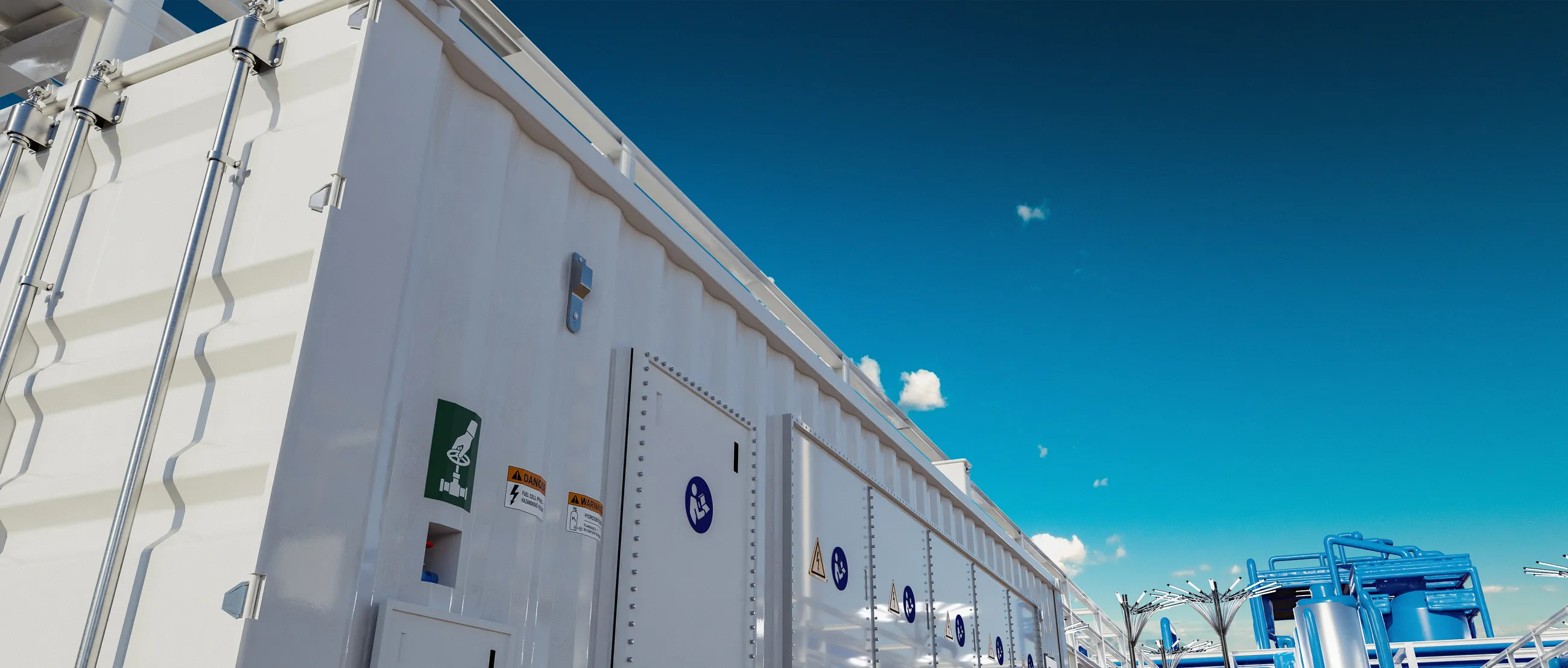
More leaves the plant than power
The same behind-the-meter plant that serves a data center also produces hydrogen, co-produced steam and dried CO₂. For an industrial host, that turns one power contract into a set of streams that can each be put to work.
What comes off it
Five streams cross the fence line.
Natural gas and demineralised water go in. What comes out is not one product but several, and on an industrial site more than one of them usually has somewhere to go.
- Electricity
- Hydrogen
- Steam
- Dried CO₂
- Cooling and utilities
- Dried CO₂Carbon is captured before combustion, dried, and leaves the plant ready for usage or sequestration.
- Cooling and utilitiesCooling towers and the utilities block are part of the plant, not a separate project for the host to solve.
The carbon
Captured before combustion, not chased afterwards.
The carbon comes out of the reforming step, where it is concentrated and easy to take, instead of out of a flue gas stream where it is not. That is a design choice, and it is the reason capture is not an optional module on this plant.
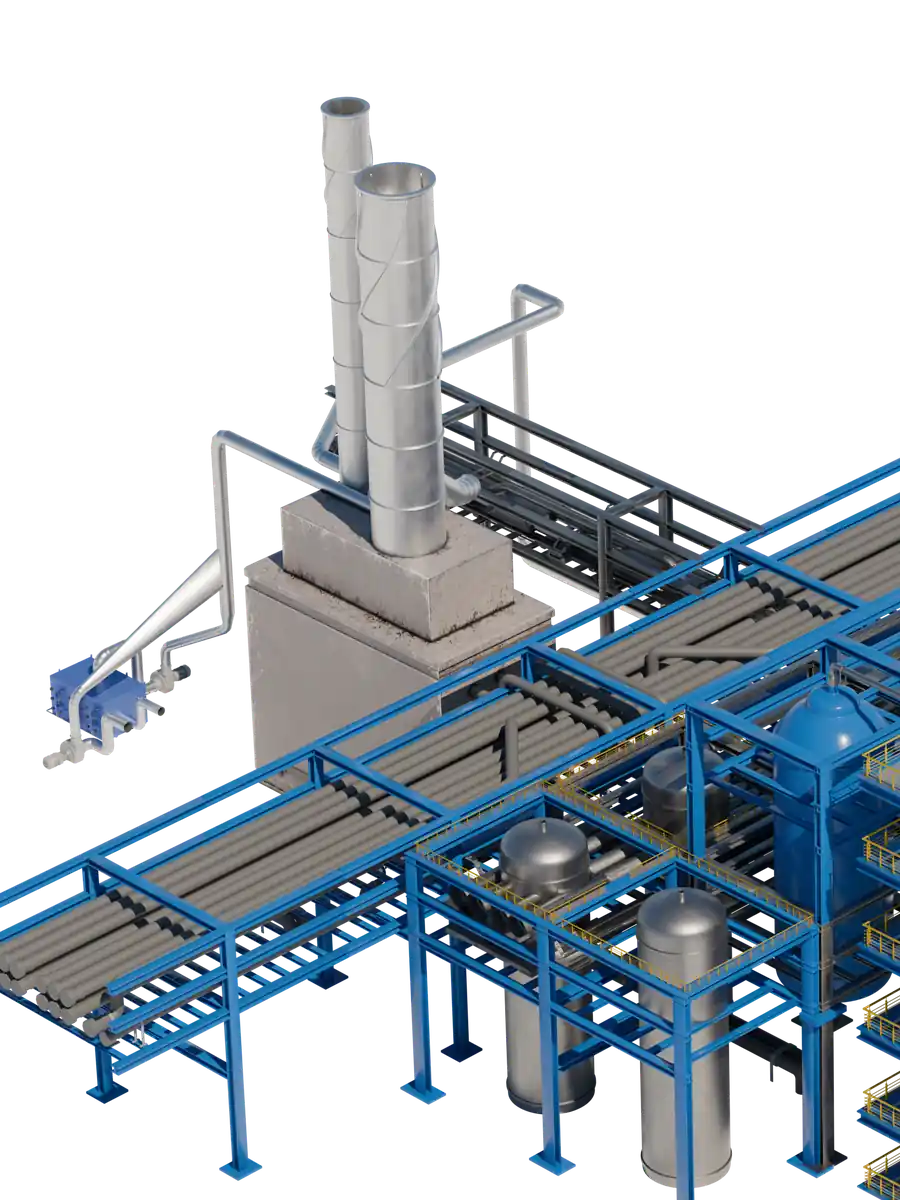
Pre-combustion capture
The capture step is proven industrial practice on this reformer platform, and the plant is designed around it from the start.
A credit attached to it
The captured carbon is designed to qualify under Section 45Q at $85 per tonne of CO₂.
Stated precisely: the fuel cell blocks themselves emit only water. The plant as a whole runs on natural gas, reformed into hydrogen on site, with the carbon captured before combustion. We publish both halves of that sentence together because only together are they true.
How it is contracted
Buy the power, or bring the gas.
An industrial host often already has a gas position. That makes the second structure below worth looking at before the first.
Financing and structure- Power purchase agreementYou buy electricity on a long-term tenor. The project company holds the gas supply agreement on a pass-through basis and carries the reformer, the capture and compression, and the fuel cell blocks.
- TollingYou supply the gas and pay for conversion into power and captured CO₂. Commodity exposure stays where it already sits, and a partial equity position in the project company is possible.